
-
-
0 Glass-Filled Materials in Injection Moulding
- Projects
- by Ben West
- 21-08-2026
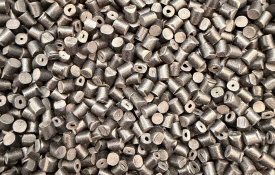
0.00 of 0 votesCase Study: Glass-Filled Materials in Injection Moulding Understanding Glass Bead and Glass Fibre Reinforced Plastics At Kent Precision Products Ltd, we regularly work with engineering polymers where standard unfilled plastics cannot provide the mechanical strength, stiffness, dimensional stability or temperature performance required by the finished component. One common solution is the use of glass-filled thermoplastics. These materials combine a base polymer—such as Nylon (PA), PBT, PP or other engineering plastics—with glass reinforcement. Two common reinforcement systems are: Glass Fibre Filled – short glass fibres are incorporated into the polymer to significantly increase strength and stiffness. Glass Bead Filled – small spherical glass particles are incorporated into the polymer, typically to improve dimensional stability, rigidity and control shrinkage while generally producing less directional behaviour than fibres. Although both materials contain glass, they can behave very differently during injection moulding. Understanding these differences is particularly important when designing the mould tool and, crucially, deciding where and how the component is gated. Why Use Glass Fibre? Glass fibre reinforced polymers are widely used where a component needs to withstand higher mechanical loads than an equivalent unfilled polymer. Depending on the polymer and percentage of reinforcement, glass fibre can provide: Increased tensile strength Increased stiffness Improved resistance to deformation Better performance at elevated temperatures Reduced overall moulding shrinkage Improved creep resistance Greater dimensional stability under load Common grades may contain 15%, 20%, 30%, 40% or even 50% glass fibre. However, adding glass fibre also changes the way the material behaves as it flows through the mould. Fibre Orientation – Why Gate Direction Matters One of the most important considerations when moulding glass fibre reinforced materials is fibre orientation. As molten material travels through the runner, gate and mould cavity, the glass fibres tend to align with the direction of material flow. This means that the finished component can have different mechanical and shrinkage properties depending on the direction in which it is measured. The fibres tend to align along the flow path. This can be extremely useful when it is deliberately engineered into the component—but problematic when it is not considered during tool design. The Importance of Gate Position Gate location should never be considered simply as the easiest place to introduce plastic into the component. With glass-filled materials, the gate can influence the final mechanical behaviour of the component. Imagine a long structural moulding designed to carry a load along its length. If the gate is positioned so that the material flows along the length of the component, a significant proportion of the glass fibres can become orientated in that direction. This can provide greater strength and stiffness in the direction where it is required. However, changing the gate position could cause the material to flow across the component instead. The same material, moulded into the same component, can therefore exhibit different performance simply because of how the fibres have been orientated during filling. Shrinkage and Warpage Fibre orientation is also important because glass fibre reinforced plastics can shrink differently parallel and perpendicular to the direction of flow. This is known as anisotropic shrinkage. Rather than the component shrinking uniformly in every direction, the orientation of the glass fibres can restrict shrinkage in one direction more than another. If this is not considered during the design of the mould tool, the result can be: Warpage Bowing Twisting Flatness problems Dimensional variation Hole misalignment Assembly difficulties Correct gate positioning can therefore be fundamental to achieving a dimensionally stable moulding. Weld Lines Can Become Critical Gate design also determines where different flow fronts meet. When two flows of glass-filled material meet inside the cavity, a weld or knit line is formed. With an unfilled polymer, a weld line may primarily be a cosmetic consideration. With highly glass-filled engineering materials, it can potentially become a mechanically weaker area. The fibres approaching the weld line may not bridge the interface in the same way as fibres aligned with the main flow. For structural components, we therefore try to avoid placing significant weld lines across: Highly loaded areas Screw bosses Clips Snap-fit features Mounting points Thin structural sections Areas subject to repeated loading This is another reason why gate position needs to be considered during the component and mould design stage rather than after the tool has been manufactured. What About Glass Bead Filled Materials? Glass bead filled materials behave differently. Rather than long fibres aligning strongly with the flow, glass beads are approximately spherical. As a result, they generally produce less directional reinforcement. Glass bead filled materials can be particularly useful where the objective is improved: Dimensional stability Rigidity Shrinkage control Surface characteristics Resistance to distortion Because beads do not orientate in the same way as fibres, the material can have more uniform properties in different directions. However, this does not mean gate position becomes unimportant. The location and design of the gate still controls: How the cavity fills Pressure distribution Weld-line locations Air traps Packing Shrinkage Surface appearance Final dimensional accuracy The correct reinforcement therefore needs to be selected around the actual requirements of the component. Glass Bead vs Glass Fibre Glass Fibre Best suited where increased mechanical strength and stiffness are major requirements. Fibre orientation must be carefully considered because the mould filling pattern can directly influence final component performance. Glass Bead Often selected where dimensional stability, rigidity and controlled shrinkage are important. Its more spherical reinforcement generally creates less directional behaviour than glass fibre. In some applications, glass bead and glass fibre can also be combined to balance mechanical strength with dimensional stability. Getting the Gate Direction Right At Kent Precision Products Ltd, our approach is to consider the moulding process during the component and tooling design stages. For glass-filled materials, this means asking: Where will the material enter the component? Which direction will it flow? How will the fibres orientate? Where will the weld lines form? Which areas of the component will experience the greatest mechanical load? How is the component likely to shrink and distort after moulding? A gate positioned in the wrong location can potentially create a component that looks perfectly acceptable but does not perform as intended. A correctly designed gating strategy can instead use the behaviour of the material to our advantage. Tool Design and Material Selection Working Together This demonstrates why successful injection moulding is about much more than simply selecting a material from a datasheet. The component design, polymer, reinforcement percentage, gate position, gate type, flow direction, wall thickness and processing conditions all interact. By considering these factors before cutting steel, potential problems can be identified earlier—when changes are considerably easier and less expensive to make. At Kent Precision Products Ltd, our in-house experience across product development, mould tool manufacture and injection moulding allows us to consider the complete manufacturing process rather than treating each stage independently. For demanding glass-filled components, this can make the difference between simply producing a moulding and producing a component that performs correctly, remains dimensionally stable and consistently meets its intended specification.
-
- Projects
- by Ben West
- 29-07-2026
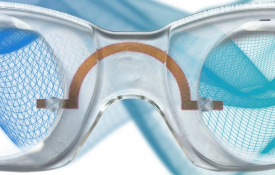
0.00 of 0 votesOptician in a Box - Revolutionizing Eyewear Access An estimated 1.6 billion people worldwide are unable to work due to the inability to afford spectacles. Kent Precision was tasked with designing a cost-effective, adjustable eyewear solution that could be easily customized to the individual user, particularly in developing countries where access to eyewear is limited. Design and Innovation The challenge was to create spectacles that could be adjusted in seconds to fit the user's facial features. The solution involved designing adjustable arms that provide up to 80mm of movement, multiple bridge sizes, and various frame widths. This enables the glasses to be quickly dispensed (within 10 minutes) and adapted to suit a wide range of users. Collaboration and Prototyping In collaboration with Style Eyes, Kent Precision utilized 3D printing to create initial prototypes. We gathered data on facial features to ensure the design would work universally across different individuals. SolidWorks was used to create detailed drawings and visualizations, with graphics added to the components to simulate the final product. Tool Making, Design, and Consultation Through tool making design and consultation, Kent Precision provided expert advice and support at every stage. We then created a prototype tool that allowed us to produce several units for BSI testing, which was essential for achieving certification as a Class 1 medical device. During this phase, we also suggested the addition of a UV stabilizer and a blue additive to ensure compliance with BSI standards and improve the durability of the product. In-House Production Tooling Once the prototype passed testing, production tooling was manufactured in-house by our expert toolmakers to support large-scale orders. This ensured that we could meet future demand while maintaining the quality and precision required for the medical device certification. Future Developments and Features As the project progresses, future developments include: Printed frames for further customization Laser-engraved markings on the frames and arms for identification and branding 3D-printed future concepts to explore new designs and features
-

0 Case Study: Kent Precision's Lifetime Guarantee
- Case Studies
- by Administrator
- 25-07-2026
4.33 of 3 votesKent Precision's Lifetime Guarantee on Plastic Injection Mould Tooling Overview In the competitive world of plastic injection moulding, tooling represents one of the largest upfront investments for manufacturers. Concerns about tool wear, maintenance costs, and unexpected replacement expenses can often create uncertainty for customers. Did you know most tool makers only offer a minimum shot guarantee on the material and not the design of the tooling? Kent Precision has addressed this challenge by introducing a Lifetime Guarantee on all injection mould tooling, providing customers with long-term confidence and exceptional value all the time the tooling is moulded with us. This includes aluminium and steel tooling. The Challenge Injection mould tools are subjected to thousands, and often millions, of production cycles throughout their operational life. Wear naturally occurs on gates, ejectors, slides, moving components, and cavity surfaces, which can affect product quality and production efficiency over time. Industry-wide, tooling maintenance and refurbishment costs can become a significant burden for manufacturers. Customers frequently face concerns such as: Unexpected tooling repair costs Reduced part quality due to tool wear Production downtime caused by tooling failures Uncertainty regarding long-term return on investment Kent Precision recognised that customers needed more than just high-quality tooling, they needed long-term assurance. The Solution Kent Precision developed a comprehensive Lifetime Guarantee on all tooling manufactured by the company. This guarantee reflects the confidence Kent Precision has in its design, engineering, manufacturing processes, and ongoing support capabilities. Every tool manufactured by the company is covered by a lifetime warranty as long as it is moulded by Kent Precision, demonstrating its commitment to quality and customer satisfaction. This warranty even extends to our aluminium tooling. High-wear components or abrasive materials are only made from steel to ensure longevity. The guarantee is supported by: Precision tool design and manufacture Experienced in-house toolmakers and moulding specialists ISO9001-aligned manufacturing processes Ongoing maintenance and technical support Continuous monitoring of tooling performance Picking the right mould materials for tooling, aluminium or steel depending upon the application. Why Kent Precision Can Offer a Lifetime Guarantee The ability to offer a lifetime tooling guarantee is rooted in decades of tooling expertise. Kent Precision's leadership team combines extensive experience in mould design, toolmaking, injection moulding, and engineering management. The company operates an integrated facility that manages design, tool manufacture, mould maintenance, sampling, and production under one roof. Key factors include: Expert Tool Design Every project begins with detailed design and consultation, ensuring tools are optimised for manufacturability, cycle efficiency, and longevity. High-Quality Tool Manufacture Kent Precision manufactures tooling using proven engineering practices designed to maximise tool life and maintain dimensional accuracy throughout production. Preventative Maintenance Regular inspection and maintenance procedures help identify wear before it impacts production, extending the effective life of the tool. In-House Technical Support Because tooling expertise remains within the company, customers receive rapid support whenever modifications, maintenance, or production adjustments are required. Customer Benefits Reduced Total Cost of Ownership Customers gain greater certainty over long-term production costs, avoiding unexpected tooling replacement expenses. Improved Production Reliability Well-maintained tooling delivers consistent part quality and reduces the risk of costly downtime. Faster Return on Investment The lifetime guarantee protects the customer's tooling investment and improves the financial viability of long-term manufacturing programmes. Long-Term Partnership Rather than a one-time tooling supplier, Kent Precision becomes a strategic manufacturing partner committed to supporting products throughout their entire lifecycle. Results The Lifetime Guarantee has become a key differentiator for Kent Precision, helping customers: Reduce tooling-related risk Increase confidence when launching new products Improve budgeting accuracy Maintain consistent production quality over extended manufacturing runs By combining expert engineering, robust tool manufacture, and ongoing support, Kent Precision delivers tooling solutions designed not only to perform today but to continue performing for years to come. Conclusion Kent Precision's Lifetime Tooling Guarantee demonstrates the company's confidence in its engineering capabilities and commitment to customer success. While many suppliers focus solely on delivering a mould, Kent Precision focuses on delivering a long-term manufacturing solution. For customers seeking reliability, quality, and peace of mind, the Lifetime Guarantee transforms tooling from a capital expense into a protected long-term investment.
-
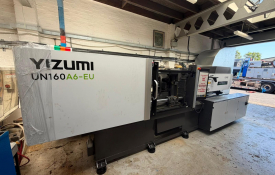
0 Investment into new Yizumi UN160-A6
- Other
- by Administrator
- 25-07-2026
0.00 of 0 votesInvesting in the Future: Kent Precision Products Adds New YIZUMI UN160-A6 Injection Moulding Machine Continued Investment in UK Manufacturing Kent Precision Products Ltd is pleased to announce the latest addition to our injection moulding facility – a new YIZUMI UN160A6 advanced injection moulding machine. This investment forms part of our continued programme to modernise our manufacturing facility, improve energy efficiency and increase the level of precision, repeatability and production capacity we can offer our customers. With the uprated 200 tonnes of clamping force, the new machine strengthens an important area of our moulding capacity and will support both existing production programmes and new projects across a wide range of industries. Why We Invested in the YIZUMI A6 As customer requirements become increasingly demanding, investment in modern manufacturing technology is essential. Customers expect competitive pricing, consistent component quality, reliable delivery and increasingly sustainable manufacturing processes. The YIZUMI A6 platform was selected because it closely aligns with these requirements. YIZUMI developed the latest A6 generation around four key principles: Intelligence. Precision. Sustainability. Efficiency. The machine combines advanced servo-hydraulic technology with intelligent process control and energy-saving features, giving Kent Precision Products greater control over the injection moulding process. For our customers, this means the potential for greater consistency, improved process control, reduced energy consumption and highly repeatable production. Improved Precision and Repeatability One of the most important factors in injection moulding is repeatability. Producing an acceptable component once is not enough. A successful production process must manufacture the same component repeatedly across hundreds, thousands or potentially millions of moulding cycles. The A6 platform incorporates YIZUMI's intelligent weight V/P control technology, designed to monitor changes during plasticising and automatically adjust process parameters to maintain consistency. YIZUMI reports product weight repeatability of up to 2‰ (0.2%) under its specified test conditions. The machine also incorporates dual pressure-centre platen technology, designed to distribute clamping forces more effectively and minimise platen deformation. This can help improve moulding consistency, reduce the risk of flash and provide more stable conditions across the mould tool. For Kent Precision Products, these capabilities provide another layer of process control when manufacturing technically demanding plastic components. Greater Energy Efficiency – Powered by Smarter Technology and Solar Energy Reducing the environmental impact and energy consumption of our manufacturing operations is an important part of Kent Precision Products Ltd's ongoing investment strategy. The new YIZUMI UN160A6 complements another major investment we have made in our manufacturing facility – on-site solar power generation. By generating a proportion of our electricity from solar energy, we can use renewable power produced directly at our site to help operate our injection moulding machinery and wider production facility. Combining renewable energy generation with modern, energy-efficient machinery allows us to approach energy reduction from both sides: reducing the amount of electricity our equipment requires while increasing the proportion that can be generated from a renewable source. The YIZUMI A6 incorporates an energy-efficient servo-hydraulic system alongside a fully enclosed aerogel barrel insulation system. These technologies are designed to reduce unnecessary energy consumption during the injection moulding process. This is particularly important within injection moulding, where machinery can operate continuously for long production runs. Even relatively small improvements in energy consumption per moulding cycle can translate into meaningful savings across thousands of production hours. Our solar installation further strengthens these benefits. During periods of solar generation, electricity produced on-site can contribute directly towards the energy requirements of our moulding operation, helping to reduce our reliance on grid electricity and lower the carbon intensity associated with manufacturing our customers' components. Together, the YIZUMI UN160A6 and our investment in solar power represent our wider approach to sustainable manufacturing: investing in technology that improves productivity and competitiveness while reducing energy consumption wherever practical. For our customers, this means access to a UK manufacturing partner that is actively investing in modern, efficient machinery and renewable energy infrastructure. As Kent Precision Products continues to modernise its production facility, energy efficiency and sustainability will remain important considerations when selecting new machinery and manufacturing technology. Efficient machinery. Renewable energy. Smarter UK manufacturing. Smarter Manufacturing The investment is about more than replacing one injection moulding machine with another. The A6 provides a platform for increasingly data-driven manufacturing. Its intelligent control capabilities allow production parameters and machine performance to be monitored more closely, helping our moulding team establish controlled and repeatable manufacturing processes. The platform also supports modern communication and manufacturing integration, providing opportunities for Kent Precision Products to continue developing our production monitoring, traceability and automation capabilities. This will become increasingly important as we continue to develop our manufacturing facility and work towards a more connected, efficient and automated production environment. Supporting New and Existing Customers The addition of the 160-tonne YIZUMI expands the capacity available to both our existing customers and companies looking for a new UK injection moulding partner. The machine will support projects including: Low, medium and high-volume plastic injection moulding Precision technical components New product development and production introduction Tool trials and validation Production transferred from other moulding suppliers Reshoring of plastic component manufacture to the UK Ongoing repeat production programmes Importantly, the machine sits alongside our wider in-house capabilities. Kent Precision Products provides support throughout the manufacturing process, from product development and prototyping through mould tool design and manufacture to injection moulding, assembly and ongoing tool maintenance. This allows us to take a customer's project from an initial concept through to a repeatable production component under one roof. Protecting Our Customers' Tooling Investment in modern machinery also helps us protect one of the most important assets belonging to our customers – their mould tools. The A6's intelligent clamping force management system is designed to identify and maintain an appropriate clamping force rather than simply relying on unnecessarily high forces. Combined with the machine's improved platen design, this can reduce unnecessary stress and wear on both the mould and machine. This approach complements the philosophy behind the lifetime guarantee Kent Precision Products offers on qualifying mould tools that we manufacture and continue to mould in-house. We don't simply want to manufacture a mould tool and produce the first batch of components. Our aim is to build long-term manufacturing partnerships and support tooling throughout its production life. Investing for the Next Generation Since 1992, Kent Precision Products Ltd has continued to develop its capabilities around one fundamental principle: providing customers with a reliable route from an idea to a manufactured product. Technology has changed considerably during that time, but our approach remains the same. We believe UK manufacturers must continue to invest in modern machinery, skilled people, automation, renewable energy, energy efficiency and manufacturing technology if we are to remain competitive. The arrival of our new YIZUMI UN160A6, combined with our investment in on-site solar generation, represents another important step in that journey. It increases our capability today while helping us build a more efficient, sustainable and competitive UK manufacturing operation for the future. From Concept to Production Whether a customer has an existing mould tool requiring a new manufacturing home or an entirely new product that needs to be developed from the ground up, Kent Precision Products can provide support throughout the process. Our capabilities include product development, prototyping, mould tool design and manufacture, tool maintenance, injection moulding, CNC machining, 3D printing, laser processing and assembly. With the addition of our latest YIZUMI 160-tonne injection moulding machine, we are continuing to invest in the equipment, technology and infrastructure required to provide our customers with competitive, reliable and high-quality UK manufacturing for years to come. A Big Thank You to STV We would also like to say a big thank you to Ryan and the team at STV for all their help and support throughout the purchase and installation of our new YIZUMI UN160A6. From the initial discussions and machine selection through to delivery, installation and commissioning, their knowledge and support have helped make the process straightforward and successful. We really appreciate the time and effort Ryan and the STV team have put into supporting Kent Precision Products Ltd with this latest investment. Thank you to Ryan and everyone at STV – we look forward to working with you again as we continue to invest and grow. stvmachinery.co.uk Have a New Injection Moulding Project? If you are developing a new plastic component, looking to transfer existing production or considering reshoring your injection moulding to the UK, speak to the team at Kent Precision Products Ltd. Info@kent-precision.co.uk 01322 270655 From concept and tooling through to full-scale production – we are ready to manufacture what comes next.